

Hip extension is the movement of your thigh moving behind your body. Think of what happens just before your foot leaves the ground when you walk, run, climb stairs, or stand up from a chair.
A simple example:
Bring your knee up towards your chest = hip flexion
Move your leg backwards behind you = hip extension
Why do we need hip extension?
1. It helps you walk efficiently
Every step requires the hip to extend as you push off the ground. If your hip can’t move behind you properly, your stride becomes shorter, and walking requires more effort.
2. It powers running and sport
Hip extension is one of the key movements for:
- Running
- Sprinting
- Jumping
- Changing direction
The glutes, hamstrings and adductor magnus work together to generate force and propel you forwards.
3. It reduces stress on other joints
When the hip doesn’t extend well, the body often compensates by:
- Arching the lower back
- Rotating the pelvis
- Putting extra load through the knees
Over time, this can contribute to discomfort in the hips, back or knees.
4. It helps posture and balance
Good hip extension allows you to stand tall and move smoothly. Limited hip extension can make you feel stiff through the front of the hips and lead to a more bent-over posture.
A simple way to think about it
Your hip is like the engine that pushes you forwards.
If the engine isn’t working properly:
- The lower back works harder
- The knees work harder
- Walking and running become less efficient
That’s why hip extension is often considered a fundamental movement quality, not just a muscle-strength issue. The goal is to be able to get your knee behind your hip while keeping your pelvis and lower back under control.
Here is a 2-minute hip extension self-assessment
Score yourself out of 3.
Test 1: Walking Push-Off (30 seconds)
Walk naturally across a room and pay attention to your stride.
Ask yourself:
- Does your leg travel behind your body before your foot leaves the ground?
- Do you have a smooth push-off?
- Does one side feel shorter or stiffer?
Pass: Smooth push-off on both sides.
Fail: Short stride, stiffness, or reduced push-off on one side.
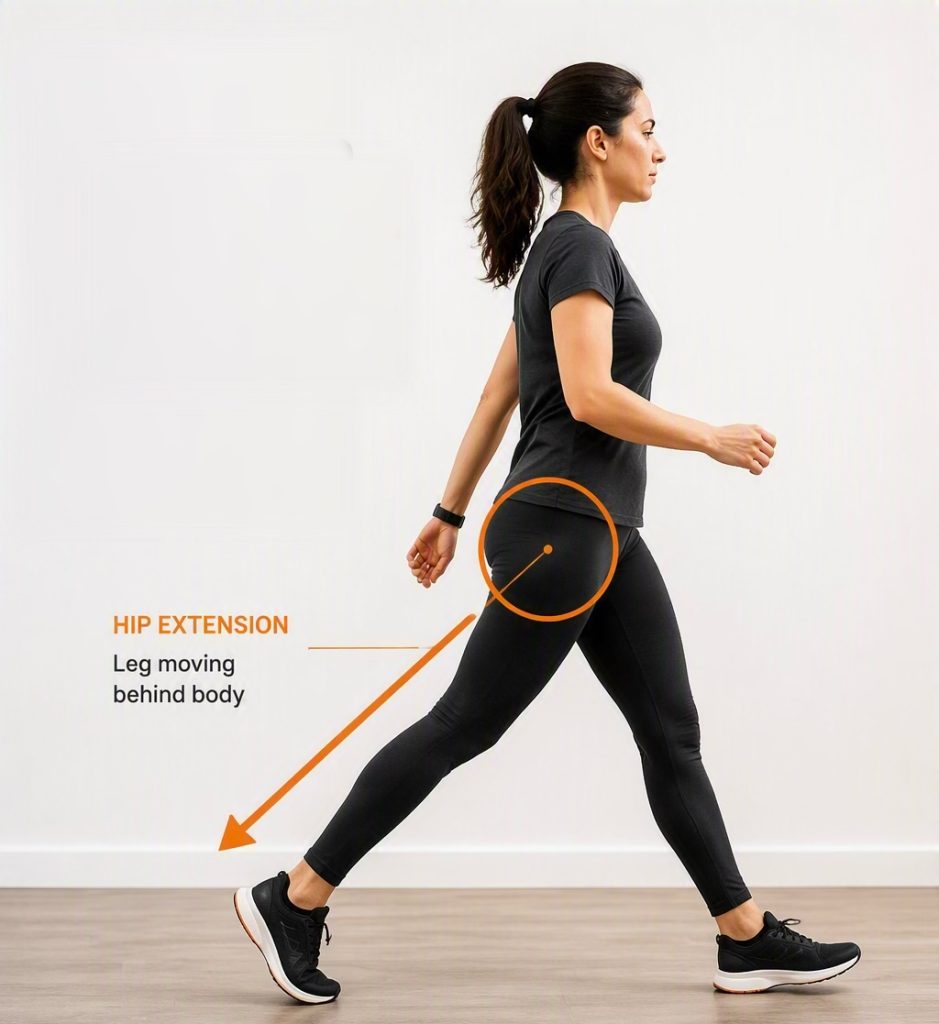
Test 1 – Walking push off. Watch your stride as you naturally walk across the room. Can your leg move behind your body before your foot leaves the ground?
Test 2: Half-Kneeling Check (45 seconds)
- Kneel on one knee with the other foot in front.
- Squeeze the glute of the kneeling leg.
- Keep your ribs down and gently drive your hips forward.
Ask yourself:
- Do you feel a stretch at the front of the hip?
- Can you stay upright without arching your lower back?
Pass: Front-of-hip stretch with a stable spine.
Fail: Lower back arches before you feel the hip stretch.
Repeat on the other side.
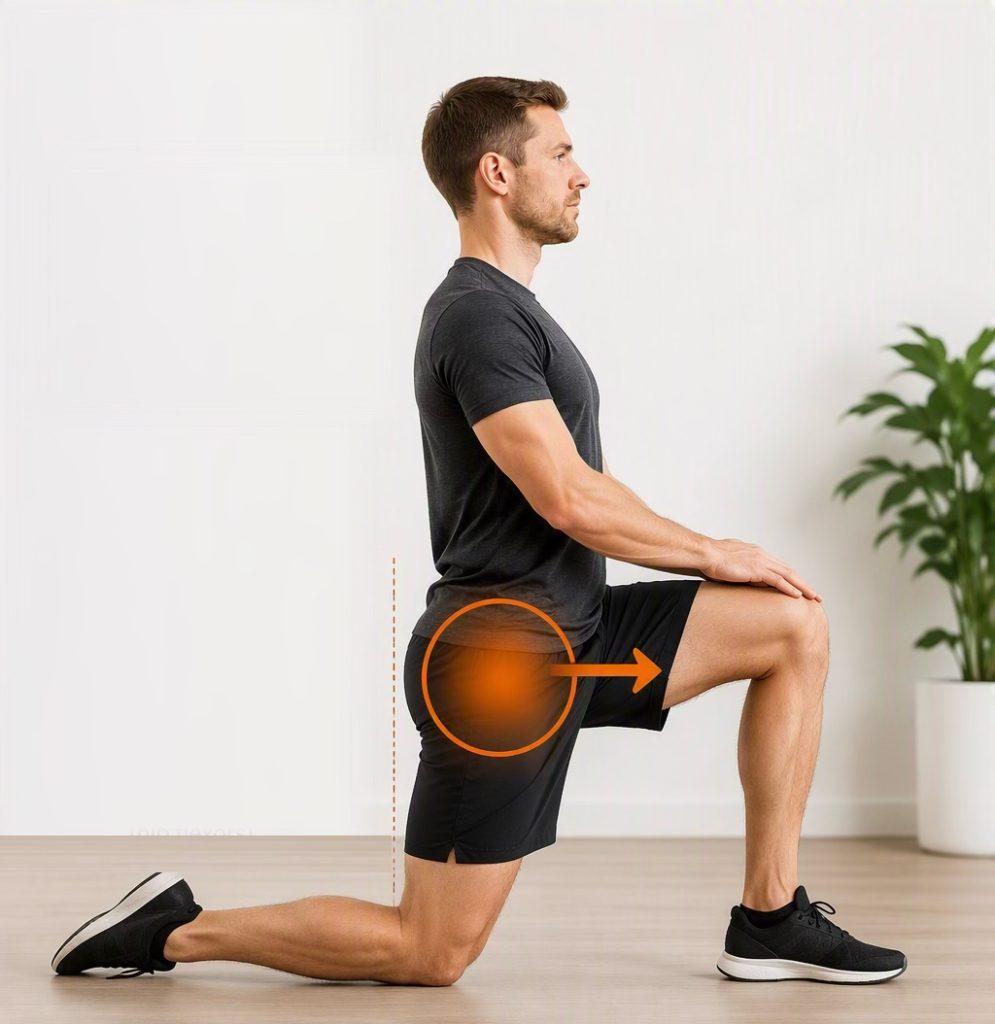
Test 2 – Half kneeling check. Drive your hips forward while keeping your ribs down.
What to feel: A stretch at the front of your hips (hip flexors).
Test 3: Single-Leg Bridge Hold (45 seconds)
- Lie on your back with one knee bent.
- Lift your hips and straighten the other leg.
- Hold for 15 seconds each side.
Ask yourself:
- Can you keep your hips level?
- Do you feel the glute and hamstring working?
- Does your lower back take over?
Pass: Strong, steady hold with minimal back effort.
Fail: Cramping, wobbling, or excessive lower back tension.
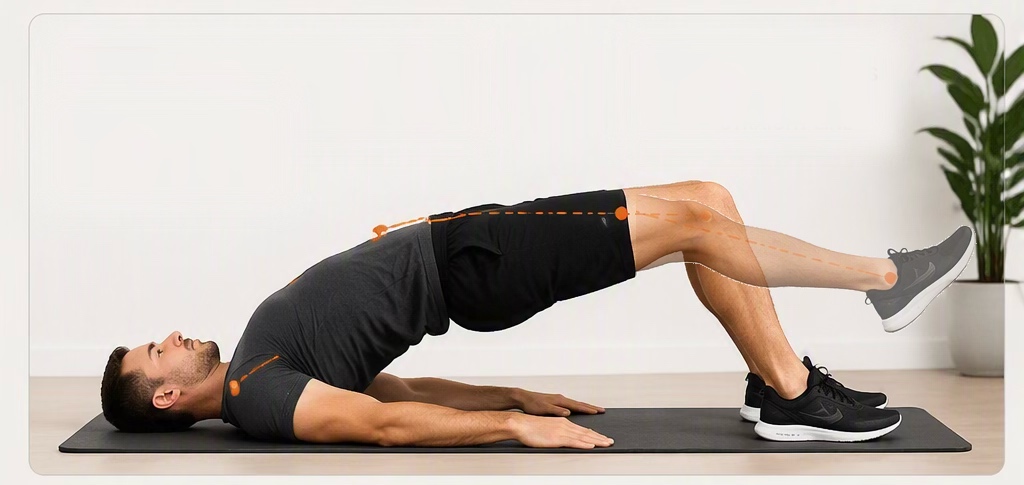
Test 3 – Single leg bridge. A simple progression: bridge, lift, hold.
Step 1 – Double leg bridge: Lie on your back, bend both knees, feet flat on the floor. Make sure your shoulders, hips and knees are in a line.
Step 2 – Lift one foot: Slowly lift one foot off the floor and straighten the leg. Hold for 15 seconds each side. Hips stay level, don’t drop them.
Can you… Keep your hips level? Feel your glute and hamstring working? Hold steady for 15 seconds without your lower back taking over?
Watch out for… Hips dropping, wobbling, cramping, lower back taking over.
Written by Gill Davy, September 2026